Getting to Know Britain’s Brilliant Corvids
Corvids- a short introduction
Corvids are among the most intelligent birds in the UK. This family includes Carrion crows, Jackdaws, Rooks, Hooded crows, Ravens, Magpies and Jays. These are species that many people recognise instantly, yet often underestimate.
Corvids are generally medium to large birds with a strong, robust appearance. Identifiable features of this family include thick, powerful bills adapted for an omnivorous diet. They have strong legs and feet for walking and manipulating objects. Their broad wings make for agile flight and dark plumage (sometimes with brightly coloured aspects like the Jay). While many corvids appear uniformly dark, upon closer observation, their feathers seem to shine. Crows having a green gloss, Rooks a reddish-purple tinge and chough often appearing a shade of blue in bright sunlight.
UK corvid species occupy a variety of landscapes, such as dense woodlands, farmland, remote coastal cliffs and busy urban areas. Most corvids form monogamous pairs, often staying together for life, and begin breeding in spring. They build large, well-constructed nests high in trees, on cliffs, or occasionally on man-made structures. They use sticks lined with softer material like wool and hair.
Clutches typically contain 3–6 eggs, and both parents share the responsibility of feeding and defending the young. Juveniles remain with the adults for some time after fledging. This extended parental care contributes to the relatively high survival rates seen in corvids compared to many other bird species.
We’ll go over the Corvid species you’re likely to find in the UK and how to tell them apart. You can also learn more from Wildspace with our upcoming events, walks and experiences.
Key Identification
Carrion Crow (Corvus corone)
Morphology: A large, black bird with a thick bill and strong legs. Often confused with ravens but smaller, with a steadier, less soaring flight.
Cool fact: Carrion crows are excellent problem solvers and have been shown to recognise individual human faces, remembering people who pose a threat.
Hooded Crow (Corvus cornix)
Morphology: Similar in size and shape to the carrion crow, but with distinctive grey body plumage contrasting with black head, wings and tail. Limited to Scotland and Northern Ireland in the UK.
Cool fact: Studies have found they can quickly learn to exploit new food sources, including opening packaging or using traffic to crack hard foods like shellfish—demonstrating problem-solving skills comparable to some of the smartest birds in the world.
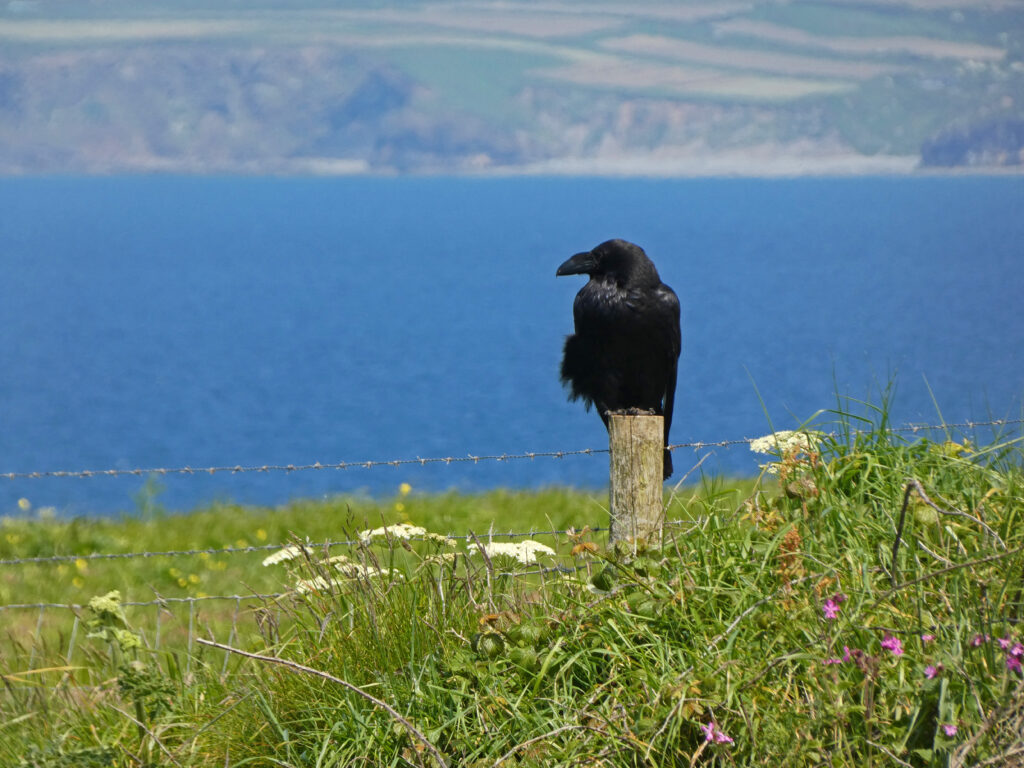
Raven (Corvus corax)
Morphology: The UK’s largest corvid, with a massive bill, shaggy throat feathers and long, fingered wings. Its tail is ‘diamond shaped’ in flight.
Cool fact: Ravens are highly vocal and can mimic sounds, including other birds and even human speech. Great predators, ravens will steal other birds eggs and hide them to eat at a later date.
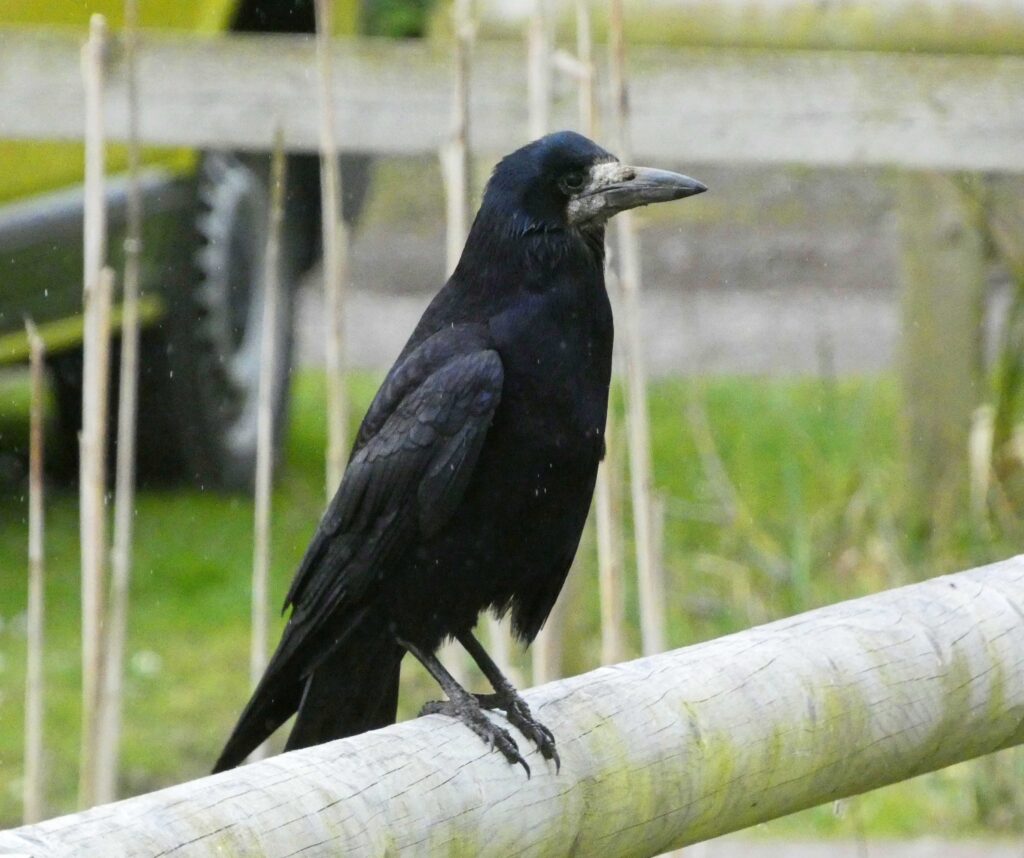
Rook (Corvus frugilegus)
Morphology: Similar to a crow but slimmer, with a peaked head and a distinctive pale, bare patch of skin at the base of the bill in adults.
Cool fact: Rooks are highly social and nest in large colonies called rookeries, often returning to the same site for decades.
Jackdaw (Coloeus monedula)
Morphology: The smallest UK corvid with a compact body, short bill and striking pale eyes set against a dark face and grey nape.
Cool fact: Jackdaws form strong pair bonds and are known for their complex social relationships. They spend a large part of pre breeding season building sturdy nests.
Magpie (Pica pica)
Morphology: Easily recognised by its bold black-and-white plumage and long, iridescent tail that flashes green and purple in sunlight.
Cool fact: Magpies are one of the few animals that can recognise themselves in a mirror. This shows advanced cognitive ability.
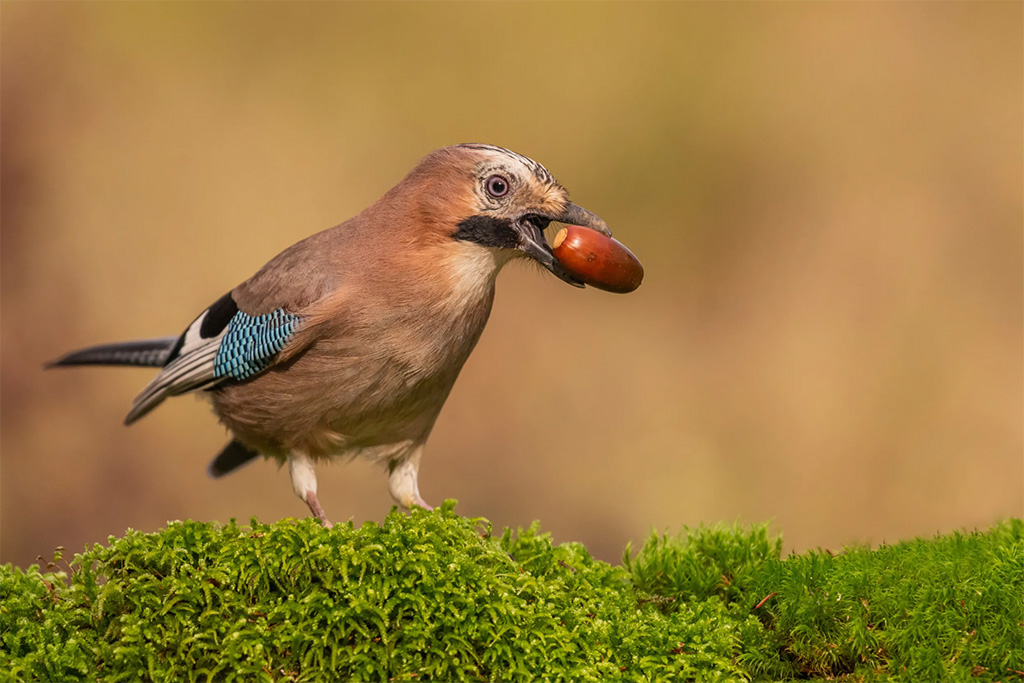
Jay (Garrulus glandarius)
Morphology: A colourful corvid with pinkish-brown plumage, a black moustache stripe and bright blue, barred wing feathers.
Cool fact: Jays have a close ecological relationship with oak trees, caching thousands of acorns each autumn. They are unintentionally responsible for helping new woodlands to grow.
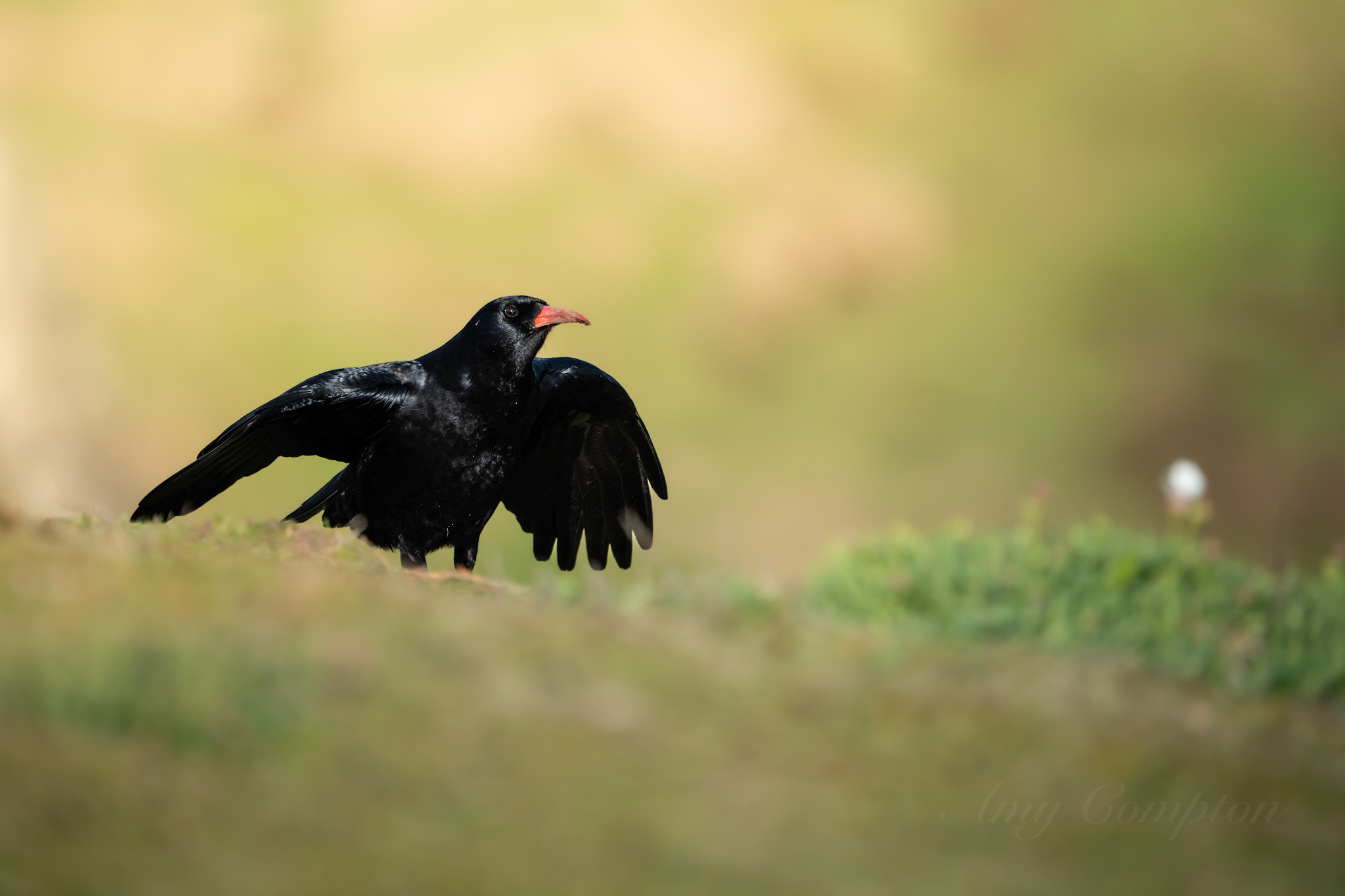
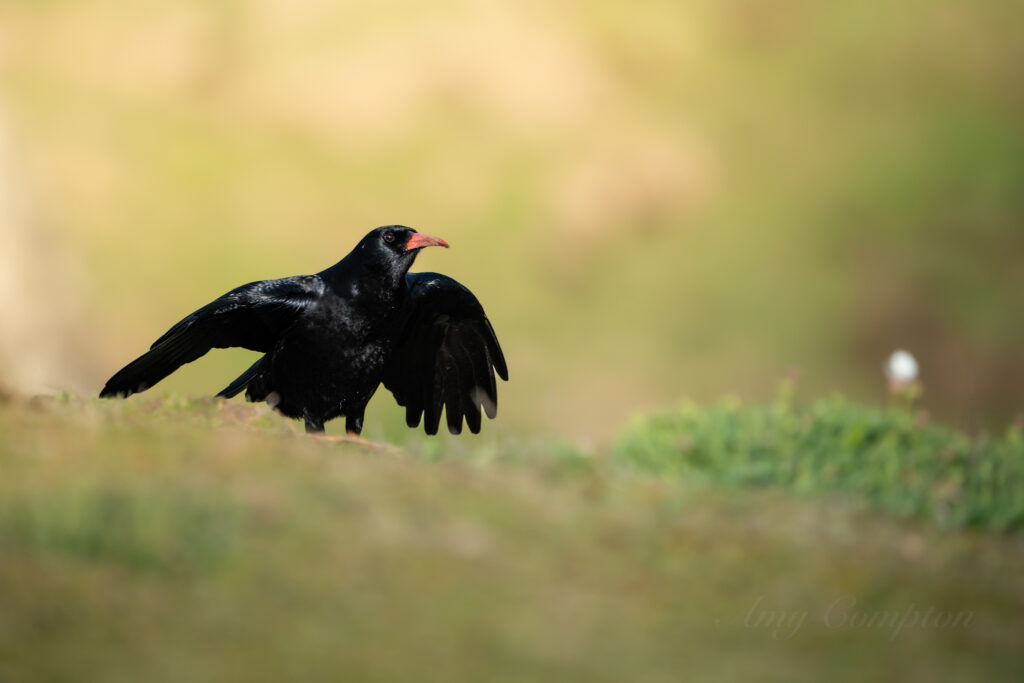
Chough (Pyrrhocorax pyrrhocorax)
Morphology: A sleek, crow-like bird with glossy black plumage, a long curved red bill and bright red legs.
Cool fact: Choughs are strongly associated with coastal cliffs and short grassland. They are considered a conservation success story in parts of Wales and Cornwall.
But what makes them so special?
Often loud, endlessly curious and highly observant, corvids play a vital ecological role as scavengers, predators and seed dispersers. Living so closely alongside people has earned them a rich mix of admiration, folklore and, at times, misunderstanding, but it is this closeness that makes them so fascinating to watch.
Corvids are renowned for their complex social lives and bold, intelligent personalities. They show advanced problem-solving skills, occasional tool use, and remarkable long-term memory, particularly when it comes to caching food. Corvids can learn from one another, cooperate within family groups, and are frequently seen engaging in play. They explore objects and their surroundings with an inquisitiveness rarely matched in the bird world.
Folklore
Corvids have long occupied a powerful place in British and Celtic folklore, often seen as messengers, guardians or symbols of transformation. Here are some of my favourite corvid folklore tales-
RAVENS:
One of the most famous legends is that of the ravens of the Tower of London. According to tradition, if the ravens ever leave the Tower, both the fortress and the kingdom will fall. Because of this belief, ravens are still kept there today as symbols of protection and continuity. In Welsh mythology, ravens are linked to Brân the Blessed, a giant king whose name literally means “Raven.” His severed head was said to protect Britain from invasion when buried beneath what is now the Tower of London, further reinforcing the raven’s role as a guardian.
MAGPIES:
The magpie is perhaps the most folklorically familiar corvid in everyday British life. The well-known rhyme “One for sorrow, two for joy” reflects old beliefs that magpies could bring luck or misfortune depending on how many were seen. This superstition was so strong that people traditionally greeted lone magpies politely to ward off bad luck.
CHOUGH:
In Cornwall and parts of Wales, the Chough holds special significance with red bill and legs setting it apart. Legend claims that King Arthur did not truly die but was transformed into a chough, meaning the bird should never be harmed. This association helped protect choughs culturally long before modern conservation efforts began.
Thank you for reading, I hope this blog has bought you closer to our brilliant corvid species here in the UK.
Molly Ashton (Community Assistant, South Wales).