
Plants for Caterpillars
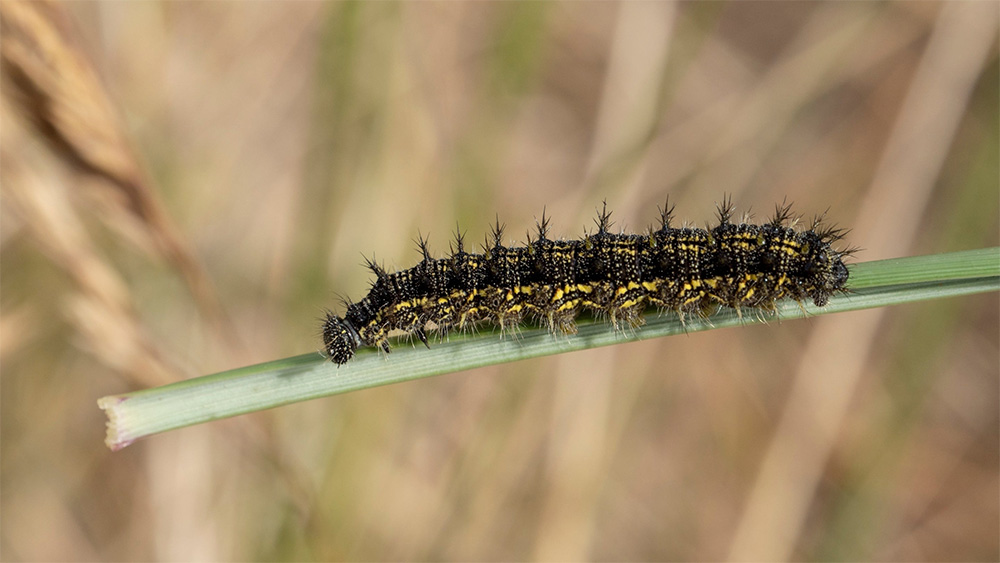
Starting your wildlife gardening journey? Then one thing that will absolutely help attract butterflies to your garden, is by providing food for their young. Caterpillars are prolific eaters and will munch away at their food plant – each butterfly young has their own food plant so planting one of these will help in attracting that particular species.
| Comma | Stinging nettle, hop, currants |
| Common blue | bird’s-foot-trefoil |
| Dingy skipper | bird’s-foot-trefoil, horseshoe vetch |
| Green-veined white | Hedge mustard, cuckooflower, nasturtium |
| Holly blue | Holly, ivy |
| Large skipper | Cock’s-foot, false brome |
| Large white | Cultivated varieties of Brassica oleracea, such as cabbage and brussel-sprouts, nasturtium, wild mignonette |
| Meadow brown | Grasses: fescues, meadow-grasses and bents |
| Orange-tip | Cuckooflower, garlic mustard, honesty |
| Painted lady | Thistles, stinging nettle |
| Peacock | Stinging nettle |
| Red admiral | Stinging nettle, hop |
| Ringlet | Cock’s-foot, false brome, tufted hair-grass, common couch |
| Small copper | Common sorrel, sheep’s sorrel |
| Small skipper | Yorkshire-fog |
| Small tortoiseshell | Stinging nettle, small nettle |
| Small white | Cultivated varieties of Brassica oleracea, such as cabbage, nasturtium, wild mignonette, hedge mustard, garlic mustard |
| Wall brown | Cock’s-foot, false brome, Yorkshire-fog, wavy hair-grass |
Majority of these plants are versatile and can be planted in flower borders, but some can also be adapted to be planted into containers making gardening for wildlife as accessible as possible.