

East Yorkshire May 2026
In May 2026, our Wild Experience Guide, Arron Roberts, lead our East Yorkshire tour. This trip was truly incredible and the species seen were nothing short of brilliant. Hear about the trip below;
What did we see in East Yorkshire in May?
East Yorkshire is a migration hotspot and on this spring tour it did not disappoint. With key sites visited over the five days such as Flamborough head and Spurn Point, we came away with seeing some cracking birds including a Common Rosefinch and a handsome Little Stint. A highlight for many was visiting Bempton cliffs where the four hundred thousand seabirds filled the sky.
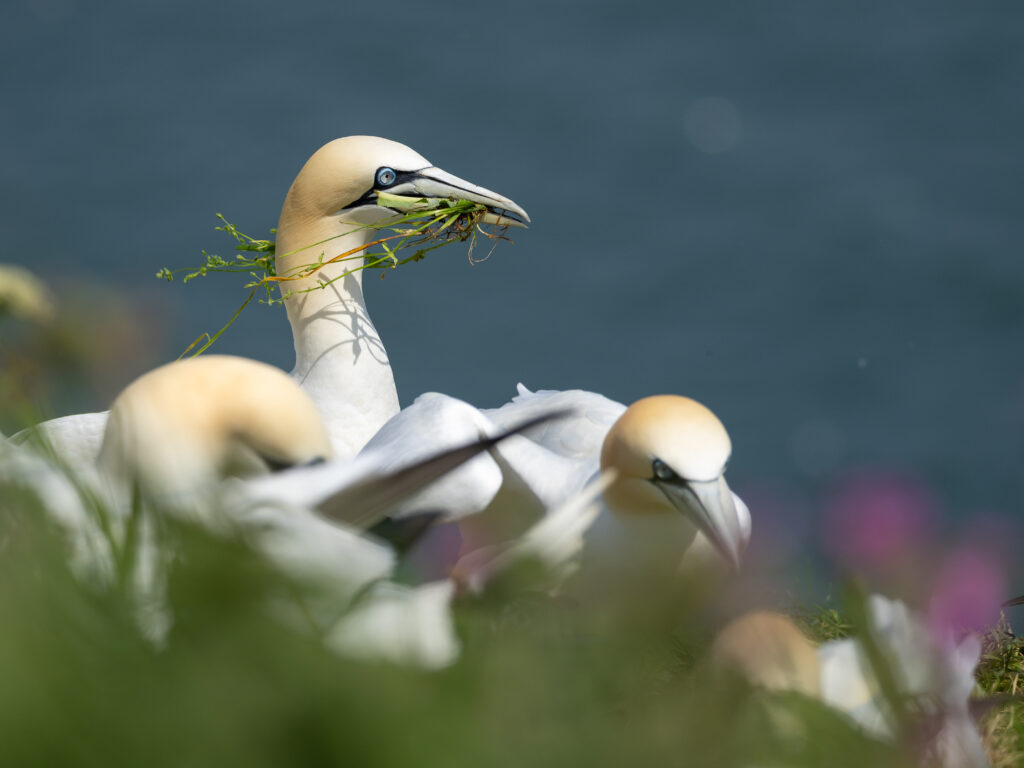
An easterly wind lifted the birds to eye level and the Gannets were busy collecting nesting material along the headland right beside the viewing platforms. The wetlands were on top form too with fantastic views of Bittern and Marsh Harrier in front of the hides. An enjoyable trip covering the best nature reserves in East Yorkshire for migrants and sought after breeding birds alike.
Day 1 – North Cave Wetlands
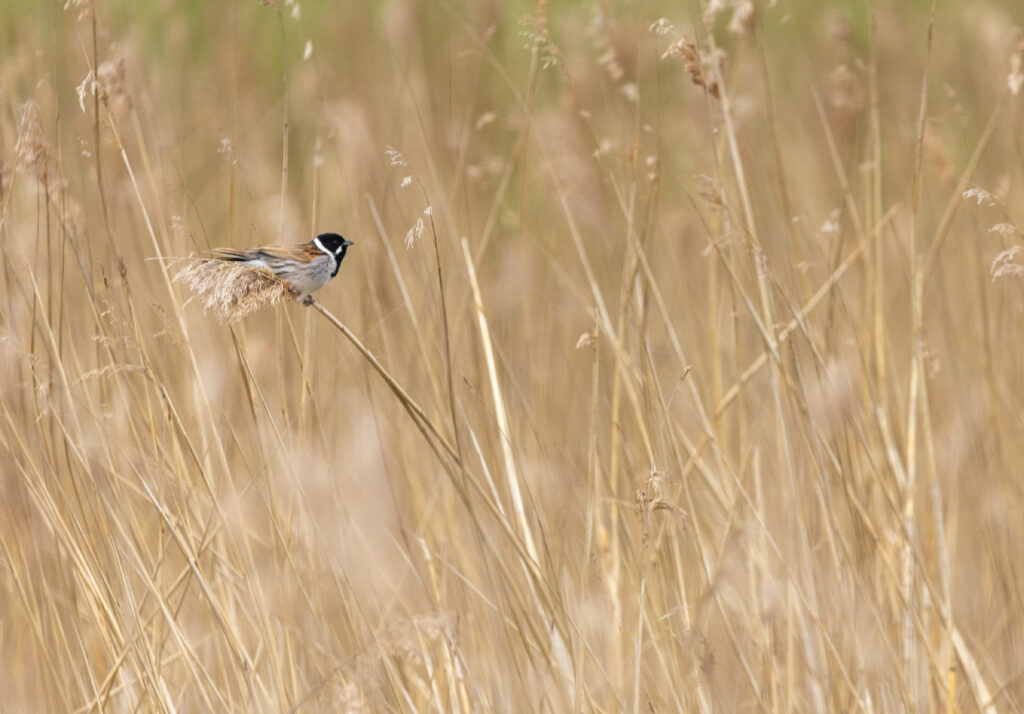
After a brief introduction at the impressive Cave Castle hotel we headed to the nearby North Cave wetlands nature reserve for some ice breaking birding to ease us into the tour. There were many species to go through from the first viewing platform with the gravel bars providing great nesting opportunities for Black-headed Gulls, Lapwing, and Little Ringed Plover. Willow Warbler, Chiffchaff, Blackcap and Reed Bunting were all in full song in this glorious weather. Sand Martins and Common Tern were dancing above the water as Tufted Duck and Red Crested Pochard dived in the deeper pools.
We had brief views of a Bittern as it kited from one reedbed to another before vanishing into the vegetation. Continuing to further scrapes, we discovered a Mediterranean Gull nesting with the Black-headed Gulls. Along the gravel bars, both Ringed and Little Ringed Plover were nesting while Avocets sifted through the water. The hot weather also brought out the insects and invertebrates. Hundreds of Common Blue and Blue-tailed Damselfly were on the wing and numerous butterflies were seen, including Brimstone and Painted Lady. All of this made for a great start to our tour in East Yorkshire.
Day 2 – Spurn point
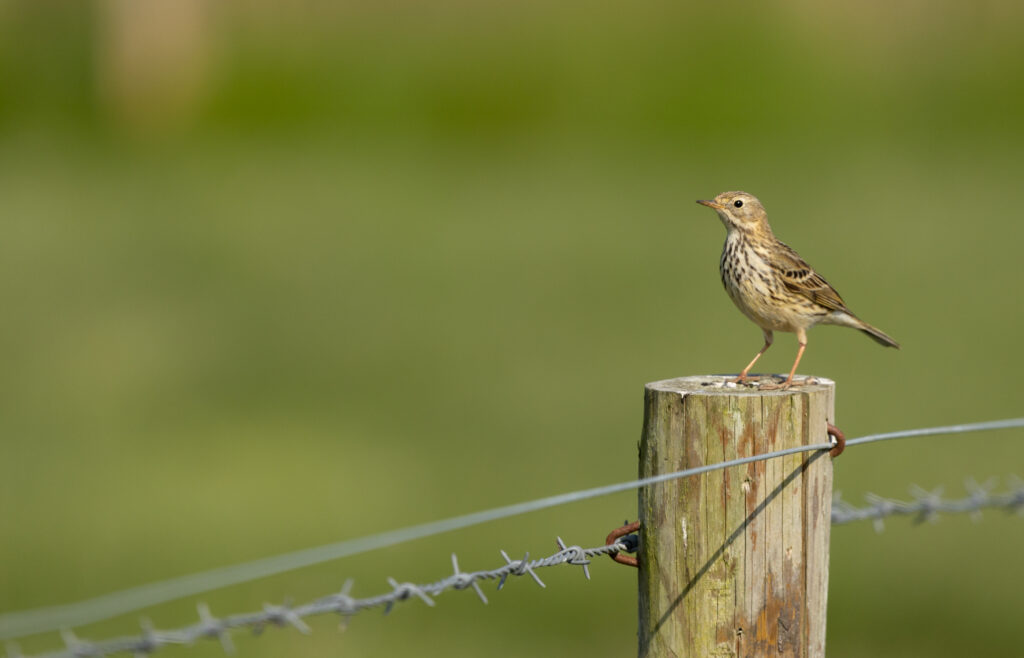
Spurn point was our destination today. With some good birds seen over the past few days, hopes were high for some rarities. Starting at the Discovery centre, we ventured south around the warren spotting the usual Skylark, Meadow Pipit, and Sedge Warbler with the open fields and reedlined ditches. The tide was out which left a huge expanse of mud of East Yorkshire’s Humber estuary. Ringed Plover and Dunlin were present along with three Whimbrel probing the mud for some juicy snacks. Looking out to the east, the sea was pretty quiet. The odd common tern, a couple of Gannets and possibly Red-Throated Diver far out in the distance.
Heading north we found our first notable bird, a Redwing! Although common in winter, it was certainly a surprise to find one hopping around in a pasture field at this time of year. After completing the triangle loop we had lunch in the Discovery centre. Our next stop was at Kilnsea wetlands. Highlights from the first hide were Avocet, Redshank, Little Ringed Plover, Wigeon and a stunning Yellow Wagtail. Following the embankment, we arrived at the Little Tern colony. Many were seen on the shores of the saline pond along with Common Tern and a selection of waders; Dunlin, Ringed Plover, Avocet and Oystercatcher. Two Brent Goose dropped into the pool, adding to the expanding species list.
Our final stop of the day was at Sammy’s Point where there had been a Common Rosefinch reported. We found the spot hearing the Rosefinch singing intermittently. We spent a good hour here with only a brief fleeting view as it moved from one dense hawthorn to another. Nevertheless, a great bird to see and hear for the group on our trip.
Our Wild Experiences tours are expert-led, immersive and for those who want to delve deeper into nature. We have a range of fantastic tours available on our website.
Day 3 – Bempton Cliffs and Flamborough head
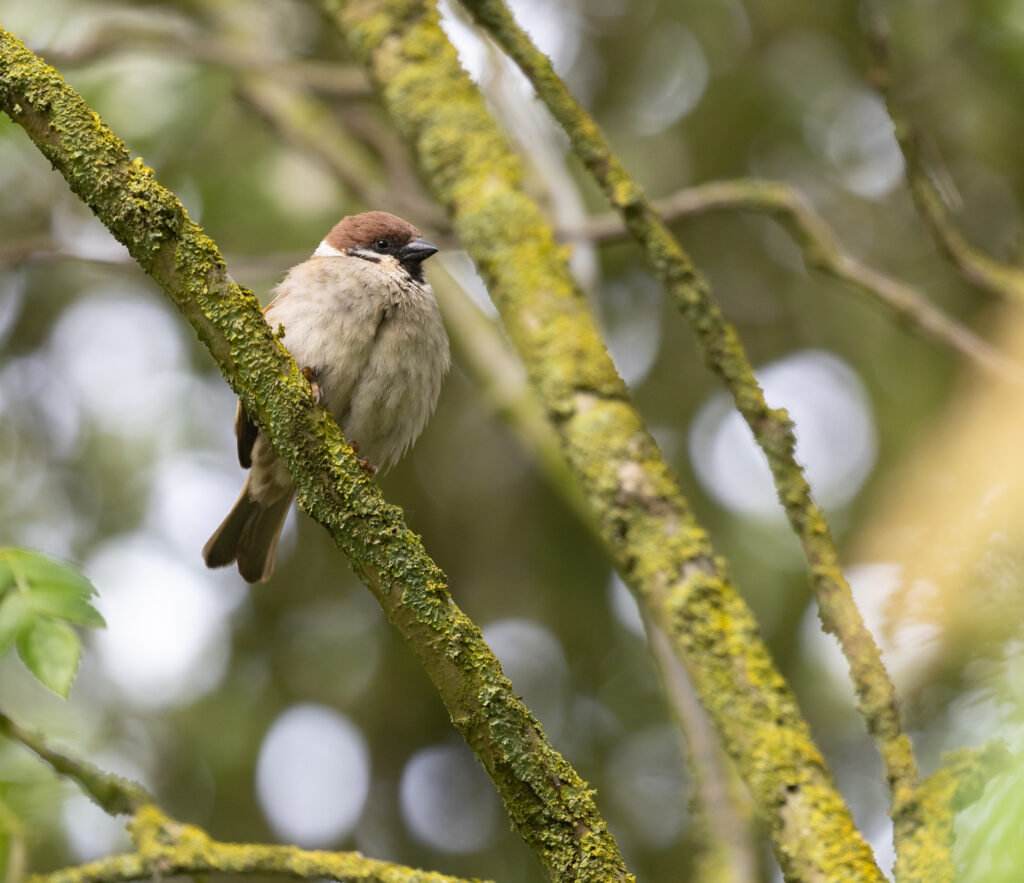
Our morning started at RSPB Bempton Cliffs. The first new species were the Tree Sparrows near the car park. It was great to see many occupying the nest boxes and feeding young in the area as these lovely birds are vanishing from many parts of the country. After a walk through of the reserve from a member of staff, we opted for the wildlife trail around the fields.
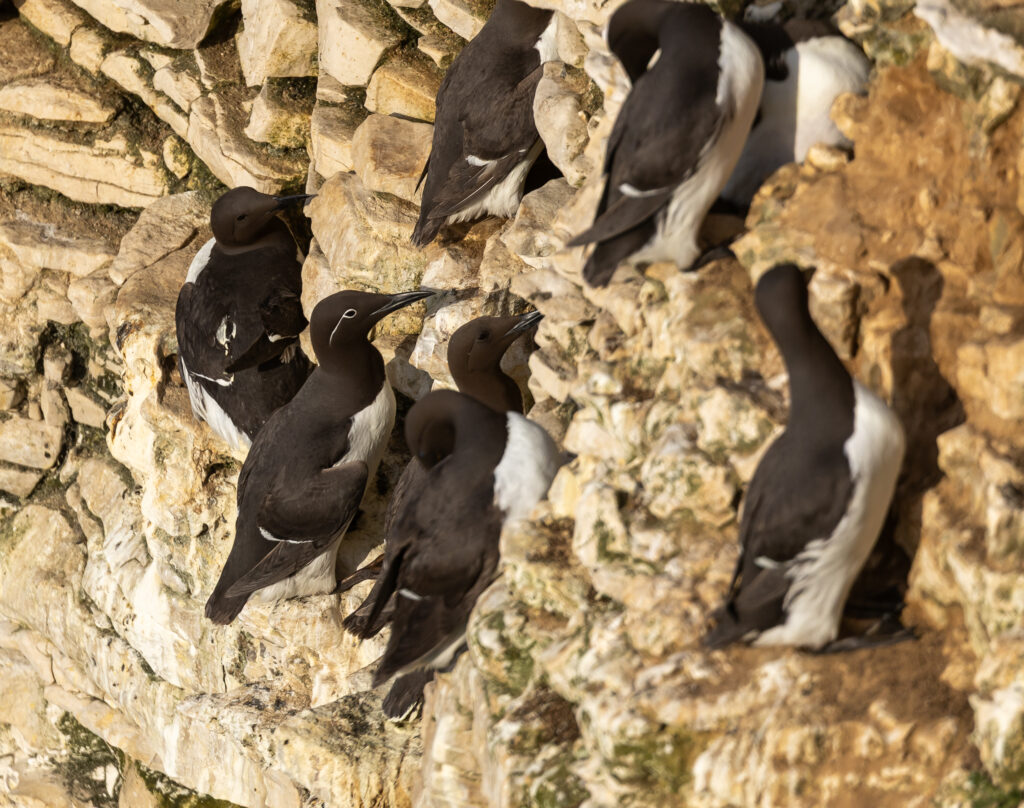
Here we had Yellowhammer and Willow Warbler both singing well from the willows. At the Cliff edge, the group were blown away with the sheer number of sea birds. Gannets, Kittiwake, Fulmar, Guillemot, and Razorbill filled the sky, the water and cliff faces. We managed to find our first Puffin, tucked away in a crevice amongst the Guillemot and Razorbills. By scanning the thousands of birds on the water we were able to pick out a handful of Puffin bobbing around. The coastal path follows the cliff edge to various viewing platforms providing incredible photo opportunities, especially of the Gannets who were busy collecting grass and nettles for nesting material.
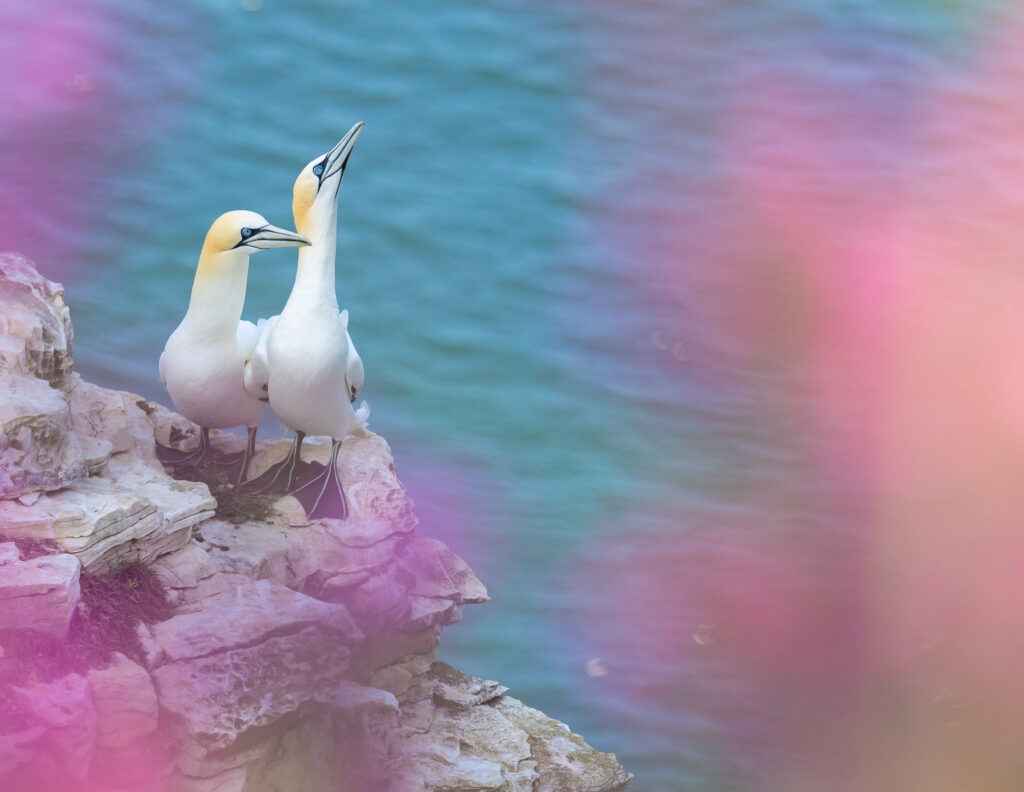
Within the surrounding fields the group found two Grey Partridge. It was brilliant to see our native partridge, a species which have declined from many parts of the UK. We also had a Corn Bunting was also singing from the fence line. Heading to the south platforms, we added a Shag to the list, with brief views around the headland. To top off the fantastic morning a Peregrine Falcon flew through flushing the Kittiwakes from the cliff face. Fortunately the bird perched on a ledge and we all had great scope views of this awesome predator.
We could have spent all day watching the seabirds but we continued on to Flamborough head lighthouse. After a fish and chip lunch we had a steady walk around the headland, looking for new migrants that may have blown in with easterly winds. Seabirds were streaming past the viewpoint along with Grey Seals playfully swimming in the waters below. We scanned the scrub and gorse bushes to find our first Stonechat, along with an out of place Sedge Warbler in the brambles. More Skylark, Meadow Pipits and Linnet rounded off the day as we made our way back to the lighthouse.
Day 4 – Blacktoft sands and Far Ings nature reserve
We were all looking forward to Blacktoft Sands, consisting of roughly 300 acres of tidal reedbed, the largest in Britain. With seven large hides with easy access and great views over the reedbed, you can see why this reserve is one of the best in the area. It didn’t take long for our first Bittern to flyby, and what a sight it was. Rarely do you get close, out in the open views for everyone.
We totaled five Bittern sightings throughout the morning! By scanning the tops of the reedbeds, we were able to spot many Bearded Tit flitting from one stem to the next. Good views were harder to come by. However, we did have plenty of good views of Marsh Harrier hunting and passing food.

At the final hide we were pleased to see an adult Spoonbill on the scrape! With one not reported that day we all enjoyed watching it feed as it sifted its way through the water. We also added Eurasian Teal to the list with a pair feeding in the channel.
After a pub lunch we arrived at Far Ings Nature Reserve. Stepping out the van we were greeted with the sound of a Cuckoo. Unfortunately we were unable to connect with the bird. Reed bunting, Sedge and Reed Warbler were still singing well and then heard the unmistakable sound of a booming Bittern! An enjoyable walk to end the sunny day.
At Wild Experiences, we offer great tours for multiple people and our newest addition, Tours for Two. Fully customisable, intimate and unforgettable. Check out Tours for Two here.
Day 5 – North Cave Wetlands
With logistics and travel home in mind we opted to revisit nearby North Cave Wetlands. Reports of a Little Stint was worth a revisit. We headed for the shallow scrapes in hopes to see this lovely little wader. On the way we were surprised to see a Barn Owl! We watched this graceful bird as it hunted over the wet meadows, possibly in need to feed its growing family. Newly hatched Lapwing chicks were also a delight to watch as they scurried around looking for insects.

There were some helpful birders in the hide which enabled us to get straight onto the target bird. This Little Stint was looking very smart in its rusty- orange breeding plumage. It was a beautiful day to finish our fantastic tour and with some of the group needing to catch the train. We said our goodbyes and best wishes for the onward journeys. Two more new birds were added to the total as we headed back to the van. A Hobby darted through and a Bullfinch was calling from the hedgerow.
Rounding up our East Yorkshire trip in May, our total bird count to 106 species seen and heard.
Head to our Wild Experiences to hear more about our upcoming trips.