

How does Wildlife Stay Cool in the Summer
Sweltering heat!
What an amazing heat wave we’ve had in the UK! Highs of 35 degrees with many of us hitting holiday hot-spots to cool off. But how does our wildlife stay cool?
The heat has certainly been quite intense for relatively early on in the summer. Usually May temperatures only get to about 25 degrees maximum, leaving the real heat for the summer ahead. This year’s heat has been very hot already, and our wildlife could suffer because of it. How much hotter is the summer going to be!?
Regardless, the summer is an incredible time to get out and see wildlife near you. Head to WildSpace Project to find out more.
How do people stay cool?
We humans can cool off by releasing excess heat through sweat; evaporation of water on our skin. We’re quite unique that we have this feature and it helps to regulate our temperatures in extreme heat. That sweaty brow is a huge advantage really! But how does wildlife stay cool? What’s their strategy in this incredible heat?

For much of the year in the UK, our temperatures remain low so fur and extra insulating adaptations help our animals stay warm. But when temperatures increase, many of them change their behaviour to adapt.
Fur to help wildlife stay cool?
We know that fur keeps animals warm but how does it keep them cool? The answer is they moult.
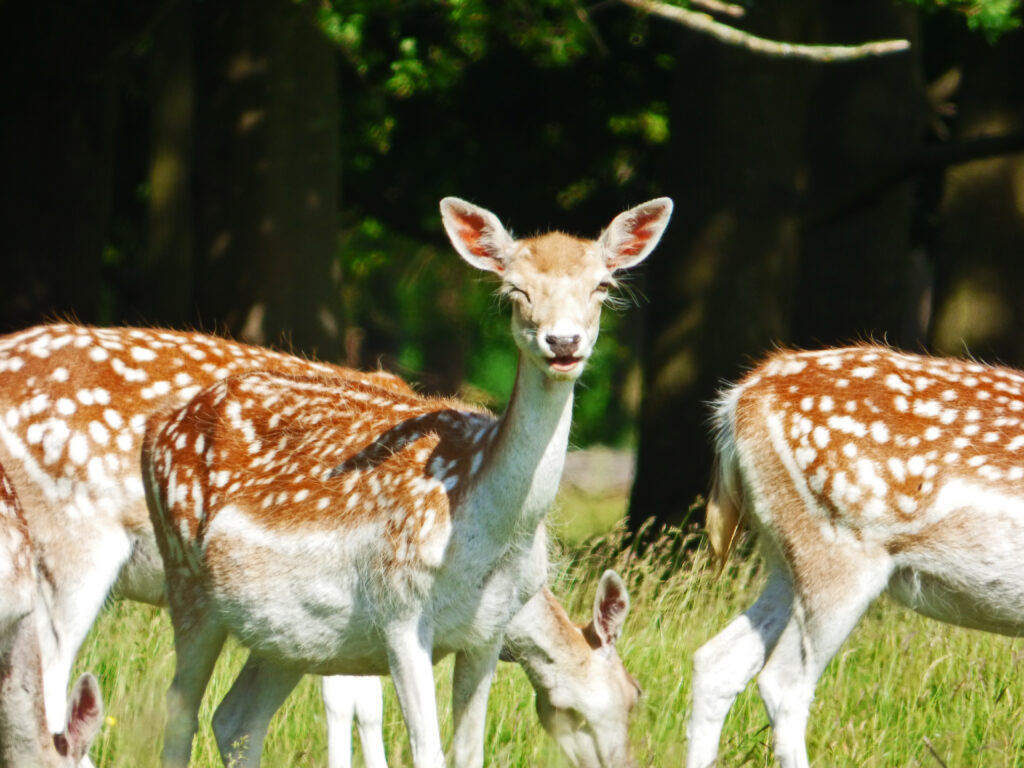
If you have a dog, you’ll notice that an increase in heat means they shed lots of fur. What’s actually happening is that their fur is changing from densely packed hairs to a light summer coat. Losing longer hair means the heat can escape from the body through the shorter fur, closer to the skin.
The long hair from their winter coat do the opposite and heat is trapped inside an insulated layer, almost like a bubble-wrap coat. This summer coat is thinner and better suited to dealing with the heat. Shorter hair means the animal looks sleeker and less fluffy too. Lots of our wildlife stay cool with moult, like foxes, badgers, even shrews change their fur too!
Did you know that seals also moult their fur as well! This helps wildlife stay cool on the hot baking sand yet keeps them insulated against the chilly sea. This is an elephant seal, shedding it’s fur to a cooler coat for the summer.

Panting to help wildlife stay cool
Our wildlife stay cool by releasing heat through their mouths and saliva by panting and breathing heavily. Mammals do this and, if you have a dog, you’ll be familiar with this panting.
This is a great strategy to cool off as this allows air to rush in and evaporate moisture from the lungs. This helps cool the body’s internal temperature. While we’ve spoken about mammals, did you know that birds do something similar!

Birds release heat by vibrating their throats quickly. They do this so cool air can enter their lungs and exchange warm air for cool air, evaporating excess moisture. Often, birds are on their nests at this time of year, tucked away in dark shady spots. But what about birds that nest on the ground like Curlew, or on high exposed nests like Ospreys. They have no shelter and no shade so have to cool down using this panting technique.
Once the chicks hatch, lots of these ground nesting birds will shade the young by standing above them. They use their outstretched wings as a parasol. As these chicks are not yet able to regulate their own body temperature, the parent birds use their wings to fan the chick, helping them stay cool.
If you want to learn more about birds from fantastic guides and friendly nature-enthusiasts, head to WildSpace and book your trip, or walk today.

How do insects stay cool?
We often think of our bigger wildlife but what about insects? Insects have many strategies to keep cool. Because they are cold blooded, they can’t control their own temperature. They rely on the heat of the sun and their environment to regulate their temperature.
Insects with wings, like Butterflies, use specialised veins in their wings to direct heat away from their bodies. They can then flap their wings to reduce their heat. Butterflies are truly fascinating and can be seen during the summer months here in the UK. At WildSpace, we have fantastic guides who will help to spot interesting butterfly species, book your place on one of our butterfly walks today.
For insects like bees that make hives, they fetch water and fan their wings to evaporate the water and cool the hive, a bit like air conditioning!
Ants are incredible for adapting to hot temperatures. Our ants in the UK take shelter when it gets too hot but the Saharan Silver Ant, an ant species living in the Sahara desert, is able to reduce its body temperature with the addition of tiny reflective hairs. These hairs reflect and repel the sun’s rays like a heat shield, keeping them cool in the extreme temperatures in the Sahara desert, which can reach up to 53 degrees! This adaptation has helped to inspire technology for NASA and space exploration!

How can we help our wildlife stay cool this summer?
We can stay cool this summer but what can we do to help our wildlife stay cool? We can help nature in a few different ways;

- Water – Offering water in your wild space really helps to keep wildlife cool, safe and is really important for their survival. Putting out a clean dish of water or even installing a pond can really help attract wildlife to your garden and help to keep them cool.
- Shade – Offer your wildlife some shade, keeping them cool in the hot of the day. Bushes and plants can be up to 15 degrees cooler! Plant a shady bush with lots of leaves so that wildlife can find space. You can make a shady corridor for wildlife to walk, perhaps a hedge to allow a wildlife highway.
- Food – Plant nectar rich flowers for insects to feast on. Planting flowers will help to shade wildlife further but will also help to feed insects like moths, helping our bats and birds too!

How can I keep cool this summer?
With this lovely hot weather, you can follow some great recipes here at WildSpace with From Nature. Stay hydrated with a lovely summer cocktail or bake a Strawberry and Thyme cake. Keep an eye on our website for more exciting recipes coming this summer!
How does Wildlife Stay Warm in the Winter?
Wildlife stays warm in the winter with lots of different strategies; fur, shivering and huddling. We can help prepare our gardens for the winter ahead. Learn how to turn your garden into a winter wildlife haven here.